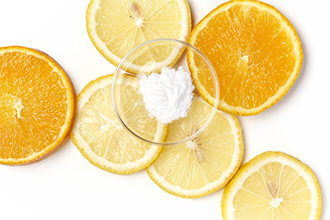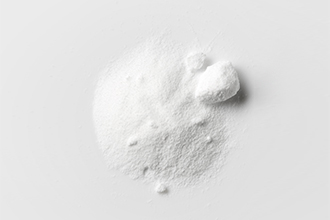
Niacinamide, also known as nicotinamide, is the amide compound of nicotinic acid (Vitamin B3).
Niacinamide is a relatively stable vitamin and an essential component in the body's ATP production.
Source
Niacinamide is currently produced primarily via enzymatic synthesis.
Purpose
Niacinamide is a common skin-brightening ingredient used in cosmetics. It can improve dull, sallow skin, reduce pigmentation, and brighten the complexion.
Efficacy
Niacinamide primarily works on the skin by inhibiting melanin transport, brightening the skin, and improving the complexion; it also helps repair the skin defense, increase epidermal thickness, and regulate sebum secretion [1].
In vitro and human models [2-3], niacinamide has been found to reduce melanosome transfer, decrease skin pigmentation, improve melasma, and alleviate inflammation; another human study [4] showed that niacinamide can thicken the stratum corneum and reduce water loss.
Applications
Niacinamide is commonly used in skin-brightening products.
References
[1] Diana D Z , Akira M , Kenneth S . The effect of 2% niacinamide on facial sebum production[J]. Journal of cosmetic and laser therapy : official publication of the European Society for Laser Dermatology, 2013, 2006年8卷2期:96-101页.
[2]Hakozaki T, Minwalla L, Zhuang J, et al. The effect of niacinamide on reducing cutaneous pigmentation and suppression of melanosome transfer[J]. British Journal of Dermatology, 2002, 147(1): 20-31.
[3] Navarrete-Solís J, Castanedo-Cázares J P, Torres-Álvarez B, et al. A double-blind, randomized clinical trial of niacinamide 4% versus hydroquinone 4% in the treatment of melasma[J]. Dermatology research and practice, 2011, 2011.
[4] Mohammed D, Crowther J M, Matts P J, et al. Influence of niacinamide containing formulations on the molecular and biophysical properties of the stratum corneum[J]. International journal of pharmaceutics, 2013, 441(1-2): 192-201.


 Language